Why affirmations in your own voice feel different
Most affirmation audio is spoken by a stranger with a soothing voice and words written for everyone. Lume Alchemy starts from the other end: your words, in your voice. Here's why that feels different.
You already talk to yourself all day
Everyone has an inner voice that comments, plans, worries and encourages. That voice is yours, and it's the one you listen to most. When affirmations are spoken in your own voice, they sound less like advice from outside and more like a conversation you're already having with yourself, just a kinder one.
Your words fit your life
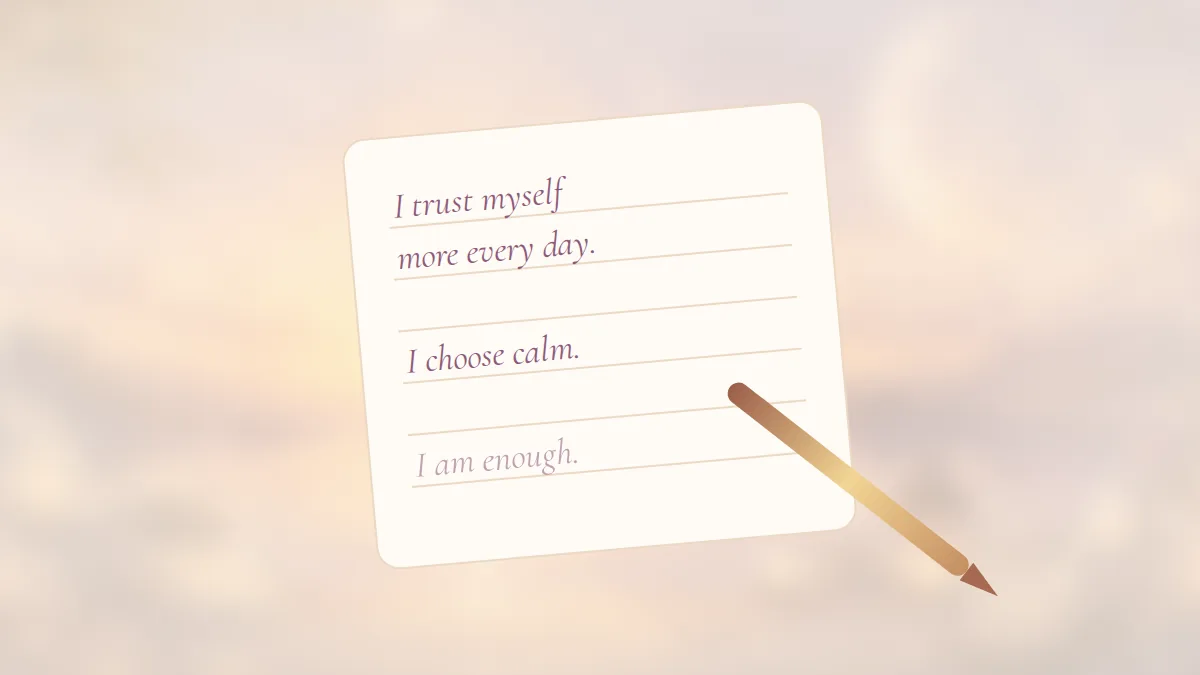
Generic affirmations are written to suit as many people as possible. That's also their weakness. "I am successful" means something different for a student, a new parent or someone starting a business. When you write and record your own affirmations, every sentence fits your situation, your goals and the way you speak.
Recording is a ritual in itself
Choosing your words, saying them out loud and hearing them back is already a small moment of reflection. Many people notice that recording their affirmations makes them think more carefully about what they really want. That thinking is part of the value.
What about the sound of your own voice?
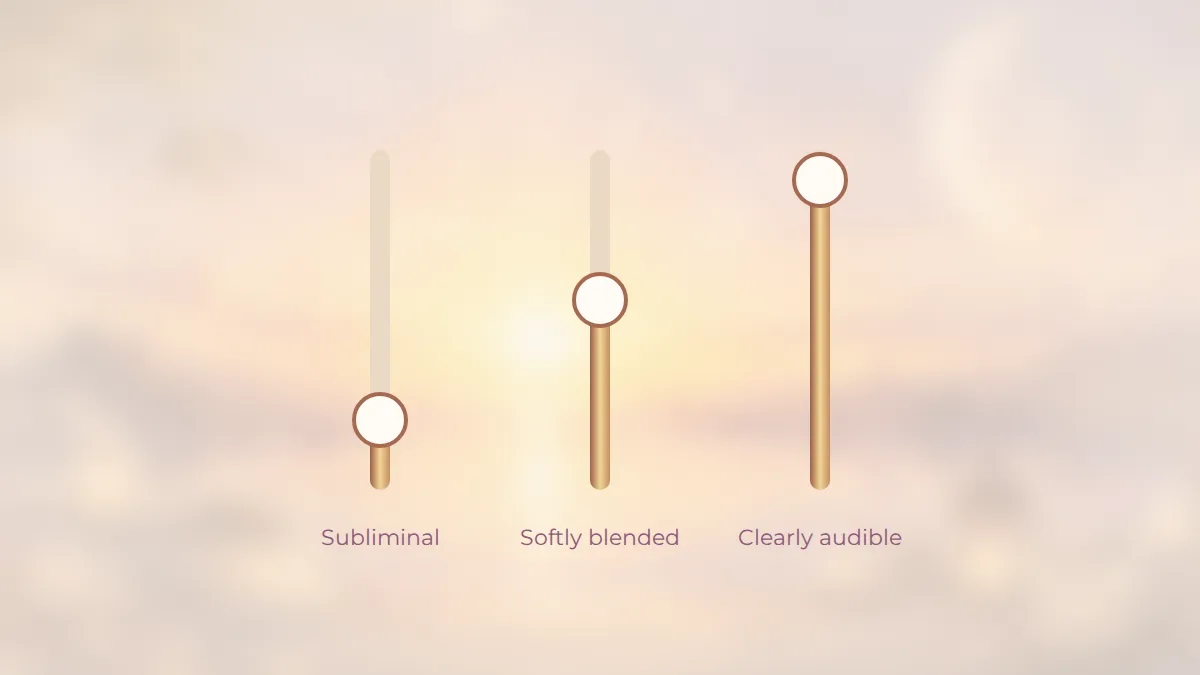
Many people find their recorded voice strange at first. That's completely normal: you usually hear yourself through your own skull, which makes your voice sound deeper to you than it does to others. After a few listens, most people get used to it. And if you choose a softly blended or subliminal level, your voice becomes a gentle presence beneath the music rather than the main sound.
Tips for recording your affirmations
- Find a quiet room and hold your phone or laptop about a hand's width from your mouth.
- Speak slowly and calmly, as if you're saying something you mean to a good friend.
- Leave a short pause between affirmations.
- Smile slightly while you speak. You can hear it in your voice.
- Record a few takes. You can keep the ones you like best.
Not sure what to say? Start with our 50 affirmation examples or try askfirmations, affirmations phrased as questions.
From generic to personal: four examples
Personal affirmations often start as generic ones. The trick is to rewrite them until they sound like something you'd actually say:
Generic
- I am successful.
- I am confident.
- I am at peace.
- I love myself.
Personal
- I'm building my business one good decision at a time.
- I speak up in meetings, even when my voice shakes a little.
- I let the evening be quiet, and that's enough.
- I'm learning to be as kind to myself as I am to my friends.
The personal versions are longer, but they're specific and believable. That's exactly what makes them land.
How to structure your recording
- Choose five to ten affirmations around one or two themes. Fewer, stronger sentences work better than a long list.
- Start with the one that matters most. In a looped track, it will come back often.
- Mix short and slightly longer sentences to keep a natural rhythm.
- End on a sentence that feels like rest, such as "I am exactly where I need to be."
Which language should you use?
Use the language you think in. If your inner voice speaks Dutch, French or Spanish, record your affirmations in that language. Your track will work in any language, because it's your voice and your words that matter. Mixing languages is fine too, as long as each sentence feels natural to you.
Your voice stays yours
Recording your voice is personal, so we treat it that way. Your recording is used only to create your track. It's never used to train AI or clone your voice, and it's deleted automatically as soon as your track is ready. The preview is made entirely in your own browser.
Create your track
Record your affirmations, choose your music and hear a free 20-second preview before you order your 30-minute track.
Create your own track
Record your affirmations in your own voice and turn them into a 30-minute track with calm music and an optional frequency. Listen to a free preview first.
Create your track