528 Hz, 432 Hz and the solfeggio frequencies explained
528 Hz, 432 Hz, 963 Hz: you'll find these numbers in countless meditation tracks. What are they, where do they come from, and what can you honestly expect from them?
What are the solfeggio frequencies?
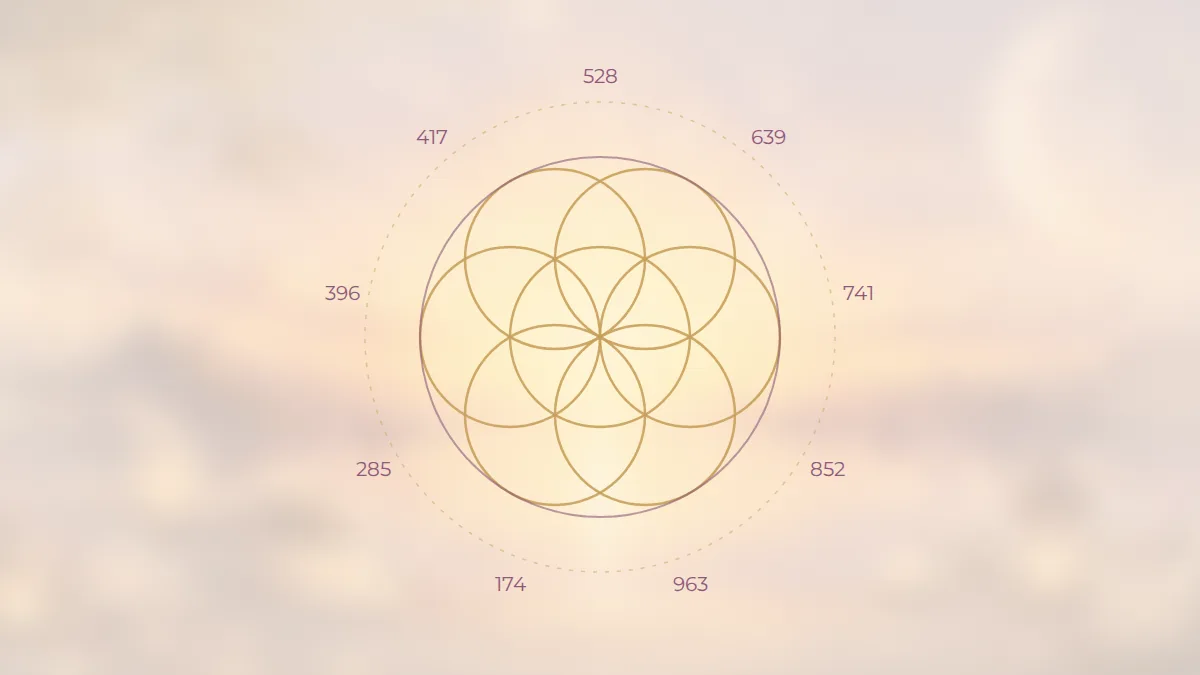
The "solfeggio frequencies" are a set of tones: 174, 285, 396, 417, 528, 639, 741, 852 and 963 Hz. They're often linked to a medieval hymn to Saint John, whose syllables (ut, re, mi, fa, sol, la) gave us the do-re-mi scale. The specific frequencies, however, are a modern idea: the list became popular in the 1970s and 1990s through books and self-help teachers, not through medieval sources.
What each frequency is traditionally associated with
These are traditional associations within meditation and sound-healing communities, not scientifically established effects.
What about 432 Hz?
432 Hz isn't part of the original solfeggio list. It's a tuning: most modern music tunes the note A to 440 Hz, while some musicians prefer A at 432 Hz, which they describe as warmer or more natural. A small pilot study in 2019 reported slightly lower heart rates when people listened to music tuned to 432 Hz, but it was far too small to draw firm conclusions.
And 528 Hz?
528 Hz is the best known of the set and is often called the "love frequency". You'll also find bold claims online, for example that it repairs DNA. There is no scientific evidence for that. What remains is simpler and still valuable: many people find a soft, steady tone calming, and like to connect a frequency to an intention such as love or transformation.
What you can realistically expect
Any calm, steady sound can help you relax, focus or unwind, especially when you use it as part of a regular routine. The number mostly gives your practice a theme. Choose the frequency whose meaning resonates with your affirmations, and pay attention to how the sound itself feels to you. If a tone feels too sharp, choose a lower frequency or a lower intensity.
How to choose a frequency for your intention
A practical approach: let the traditional meaning match the theme of your affirmations.
Then listen. If a tone feels pleasant and steady to you, it's a good fit. If it feels sharp or distracting, choose another one or skip the frequency altogether. Your music and your own voice already carry the track.
How loud should the tone be?
Softer than you might think. A frequency works best as a gentle layer beneath the music, not as the main sound. Higher tones, such as 741 Hz and above, can feel piercing at a high intensity. Start subtle and only turn it up if you'd like it more present.
A pure tone or music tuned to 432 Hz?
There are two ways to "use" a frequency. Some tracks retune the whole piece of music, which is what 432 Hz tuning refers to. Others add a pure, continuous tone at that frequency. Lume Alchemy does the latter: a clean tone that sits quietly beneath your music and voice for the whole 30 minutes.
Adding a frequency to your track
On Lume Alchemy you can add any of these frequencies to your track as a pure tone beneath your music and voice, and set the intensity from subtle to strong. You hear the result live in the 20-second preview. Prefer a rhythmic effect? Read about binaural beats.
Frequencies are offered for relaxation and personal wellbeing. They are not a medical treatment and are not intended to diagnose, treat or cure any condition.
Create your own track
Record your affirmations in your own voice and turn them into a 30-minute track with calm music and an optional frequency. Listen to a free preview first.
Create your track