Binaural beats explained: delta, theta and alpha, and when to use which
Binaural beats are a fascinating trick of hearing: two slightly different tones, one in each ear, that your brain experiences as a gentle pulse. Depending on the speed of that pulse, they're used for deep sleep, meditation or calm focus. Here's how they work, what delta, theta and alpha mean, and why you need headphones.
How binaural beats work
Play a 200 Hz tone in your left ear and a 206 Hz tone in your right ear, and your brain perceives a third, soft "beat" of 6 Hz: the difference between the two. That beat doesn't exist in the air around you; it's created in your auditory system. That's why it's called binaural: it needs both ears, each receiving its own tone.
By changing the difference between the two tones, you change the speed of the beat. A difference of 2 Hz gives a slow, deep pulse; a difference of 10 Hz a faster one. That speed is what the names delta, theta and alpha refer to.
Why you need headphones
Through speakers, both tones reach both ears and mix in the room, and the effect largely disappears. With headphones or earbuds, each ear receives only its own tone, which is exactly what binaural beats need. So: headphones on, volume comfortable, and you're set.
Brainwaves: the idea behind the names
Your brain's electrical activity can be measured as waves, and scientists group them into frequency bands. Each band is associated with a different state of mind, from deep sleep to active thinking. The idea behind binaural beats is that listening to a beat in a certain band may nudge you towards the matching state. This is often called brainwave entrainment. Whether beats really shift your brainwaves is still debated, so think of the bands as a guide to the kind of experience a track is designed for.
There are five commonly used bands. Delta, theta and alpha are the three most used for relaxation and sleep, which is why you'll see them most often. Beta and gamma are faster and mainly linked to alertness.
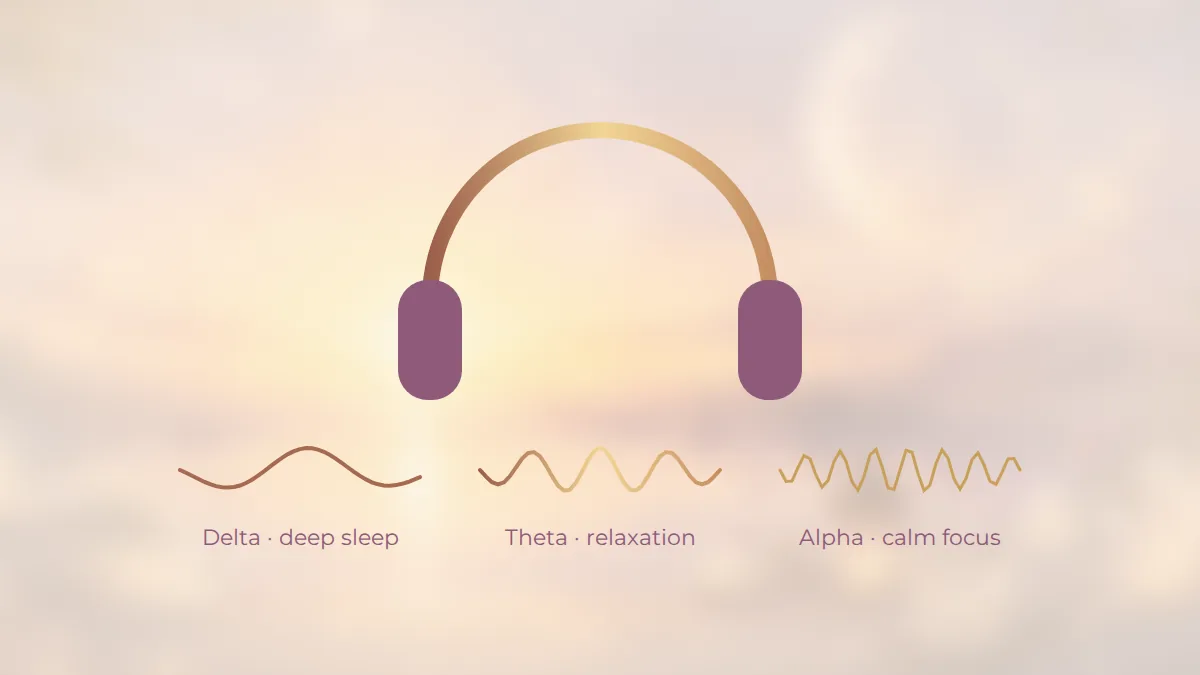
Delta: deep sleep (below 4 Hz)
Delta waves are the slowest and are associated with deep, dreamless sleep. Delta binaural beats, often between 1 and 3 Hz, are designed for falling asleep and resting deeply.
- Best moment: in bed, as part of your sleep routine.
- Good to know: delta tracks can make you drowsy, so only listen when you can fully let go.
Theta: deep relaxation and meditation (4 to 8 Hz)
Theta is associated with deep relaxation, meditation, daydreaming and the drowsy, dreamy state just before sleep. Theta beats, often around 4 to 7 Hz, are popular for meditation and winding down in the evening.
- Best moment: meditation, a quiet evening, or the time just before sleep.
- Good to know: theta sits between rest and awareness, which makes it a good fit for listening to affirmations while relaxed.
Alpha: relaxed alertness (8 to 12 Hz)
Alpha is associated with a calm but awake state: relaxed, present and clear. Think of how you feel on a quiet walk or just after closing your eyes. Alpha beats, often around 10 Hz, are used for unwinding without getting sleepy, light creative work and calm focus.
- Best moment: a break during the day, reading, journaling or a gentle start to the morning.
- Good to know: of the three, alpha keeps you most awake.
Beta and gamma: alertness and focus (above 12 Hz)
Beta (roughly 12 to 30 Hz) is linked to active thinking and concentration, gamma (above 30 Hz) to intense focus and processing. Beats in these bands are marketed for study and productivity, but they're less common and less suited to relaxation or sleep.
Which one should you choose?
A simple rule: the slower the beat, the more it's designed for rest. Choose by the moment you'll be listening and by how you want to feel afterwards.
What does research say?
Research on binaural beats is growing but mixed. A 2019 meta-analysis of 22 studies found a moderate overall effect on memory, attention, anxiety and pain perception, and noted that the effect depends on the frequency used and how long people listen. At the same time, many individual studies are small, methods differ and not every study finds an effect. The fair summary: promising for relaxation, but not a guaranteed outcome, and not a treatment.
Binaural, monaural and isochronic beats
You may come across other terms. Monaural beats combine two tones before they reach your ears, so they also work through speakers. Isochronic tones switch a single tone on and off in a regular rhythm. Binaural beats are the only ones that are created inside your hearing, which is why they need headphones.
How to use binaural beats
- Use headphones and a comfortable, low volume.
- Lie down or sit comfortably, especially with delta and theta.
- Give it time. Many people prefer sessions of 20 to 30 minutes.
- Never listen while driving or doing anything that needs your full attention.
If you have epilepsy or are prone to seizures, check with your doctor before using binaural beats.
Binaural beats with your own affirmations
On Lume Alchemy you can currently choose Theta binaural as your music: a 6 Hz beat combined with a soft pad, with your own affirmations woven in. Theta is a natural match for affirmations, because it's designed for a relaxed yet receptive state. Combine it with a frequency if you like, and listen to the preview with headphones to hear the effect. See also when and how to listen.
Binaural beats are meant for relaxation and personal wellbeing. They are not a medical treatment.
Create your own track
Record your affirmations in your own voice and turn them into a 30-minute track with calm music and an optional frequency. Listen to a free preview first.
Create your track